When you run a service-based business, people can’t pick up your product and test it before they buy. They’re buying you: your expertise, your reliability, your way of working. That means your brand is doing a lot of heavy lifting. It’s the first impression, the reassurance and the reminder, all at once.
As a graphic designer specialising in brand identity and website design, I’ve found that the businesses people trust most are the ones whose brand feels considered at every touchpoint, whatever their budget. Here are the five principles I come back to most often.
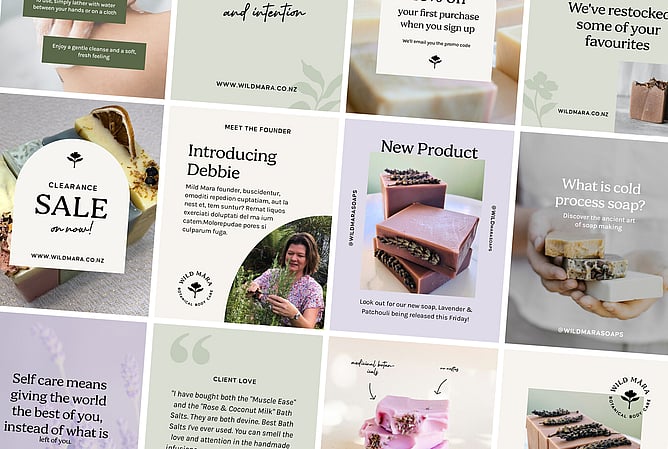
1. Consistency
Your brand journey starts long before someone becomes a client. They might spot your Instagram post, visit your website, receive a business card at a networking event, and then open your proposal. If each of those feels like it came from a different business, clients may start to feel unsure.
Consistency means using the same logo, colour palette, fonts, imagery style and tone of voice everywhere. It’s what lets people recognise you in a busy feed or a stack of brochures. A simple brand guidelines document, even just a couple of pages, keeps you (and anyone who works with you) on track as your business grows.
2. Visual hierarchy
Visual hierarchy is how you guide the eye. Every flyer, web page and social post should make it instantly clear what matters most, what comes next, and what to do about it.
You create hierarchy through size, weight, colour, contrast and spacing. A strong headline, a clear supporting line and one obvious call to action will always outperform a layout where everything shouts at once. Think about your services page: can a visitor tell within seconds what you offer and how to get in touch? If not, hierarchy is usually the fix.
3. Simplicity
Small businesses often feel pressure to say everything, everywhere. But clarity is far more persuasive than volume. Simplicity means choosing what to leave out: fewer fonts, a restrained colour palette, generous white space and concise copy.
A simple brand is easier to remember, easier to apply consistently, and easier for clients to understand. On a website, that might mean a streamlined menu and one primary action per page. In print, it might be a business card with only the details someone genuinely needs. Simple doesn’t mean boring; it means every element has earned its place.
4. Accessibility
A great brand experience works for everyone, and accessibility is both the right thing to do and good for business. If someone can’t read your text or navigate your site, they can’t become a client.
Start with colour contrast: pale grey text on a white background might look elegant, but it’s hard for many people to read. Choose legible font sizes, write descriptive alt text for images, make links and buttons clearly identifiable, and don’t rely on colour alone to convey meaning. On social media, add captions to video and use camel case for hashtags (#BrandDesign rather than #branddesign) so screen readers can interpret them. These small decisions widen your audience and show you care.
5. Responsive website design
Most people will first encounter your website on their phone, perhaps after a recommendation or a quick search. If your site is awkward to use on a small screen, many will simply leave.
Responsive design means your layout adapts smoothly to any device, from phone to tablet to desktop. Text stays readable, buttons are easy to tap, images resize properly, and your contact details are never more than a thumb-tap away. It also means thinking about speed: optimised images and clean code keep pages loading quickly. Your website is often your busiest salesperson, so make sure it performs well wherever it’s viewed.
Bringing it all together
These principles work best together. Consistency gives your brand a recognisable face; hierarchy and simplicity make your message easy to absorb; and accessibility and responsive design make sure it reaches everyone, on any device. Each touchpoint, from a printed brochure to a social post or booking page, builds on the last.
You don’t need to overhaul everything at once. Try walking through your own brand journey as a potential client would, from first glance to enquiry, and note where things feel disjointed or hard to read. Those gaps are your starting point.
If you’d like a hand, take a look at my services or get in touch. A thoughtful, cohesive brand works hard for your business, and it’s well worth getting right.