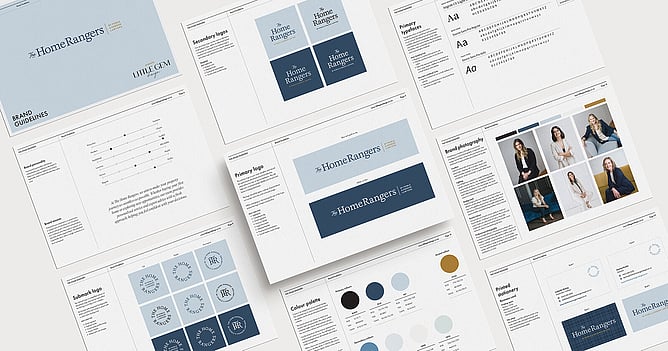
What brand consistency actually means
Brand consistency is about creating a cohesive and recognisable experience across every touchpoint of your business. A touchpoint is anywhere someone interacts with your brand, from your website and social media pages to your business card, email signature or proposal document.
When your branding is consistent, your business feels more professional, trustworthy and memorable. It helps customers quickly recognise your business and creates a stronger connection over time.
Consistency doesn’t mean everything has to look identical. Instead, it means everything should feel connected and aligned with your brand.
Why brand consistency is important
For many small businesses, branding can feel like “just a logo.” But your branding is actually the overall visual and emotional experience people have with your business.
When your branding is inconsistent, it can create confusion and make your business feel less established. Consistency helps build familiarity and trust, which is especially important for new businesses trying to create a strong first impression.
The more consistently people see your branding, the more likely they are to remember your business.
Start with your brand guidelines
Your brand guidelines are there to help you confidently use your branding across different platforms and marketing materials. Think of them as a reference guide for your visual identity.
Your guidelines may include:
Logo variations and usage
Brand colours
Font recommendations
Image style direction
Spacing and layout guidance
Tone of voice suggestions
Before creating new marketing material, it’s helpful to refer back to your brand guidelines to keep everything aligned. This becomes especially useful as your business grows or if other people begin creating content for your business.
Using your logo correctly
Your logo suite has been designed to give you flexibility across different platforms and layouts. Each logo variation has a purpose, and using the right version can help your branding feel more polished and professional.
Your brand package may include a primary logo, secondary logo, submark or icon, wordmark, light and dark variations, along with different file formats for print and digital use. Having multiple versions allows your branding to work across a range of layouts and applications while still feeling consistent.
A few simple ways to keep your logo consistent:
Avoid stretching or distorting the logo
Don’t add shadows, outlines or extra effects
Use the correct colour variations
Leave enough clear space around the logo
Choose the appropriate logo version for the layout
Keeping your colours consistent
Colour plays a big role in how people recognise and remember your business. Consistently using your brand colours helps create a cohesive and professional brand identity.
Your brand files may include HEX, RGB and CMYK colour codes for both print and digital use. To make things easier, consider saving your brand colours on platforms like Canva so they’re easy to access.
Try to avoid using random colours outside your palette or constantly changing colours across different platforms, as even small inconsistencies can make branding feel less cohesive.
Using your brand fonts
Fonts help shape the personality and professionalism of your brand. Using consistent typography across your website, social media, and marketing materials helps everything feel more connected.
Your brand package may include heading fonts, body fonts and recommended alternatives for web use. To keep your branding consistent, try to use the same fonts across your platforms and avoid mixing too many different styles.
Keeping your brand voice consistent
Brand consistency isn’t just visual; it also includes how your business communicates.
Your tone of voice helps shape how people perceive your business. Whether your brand feels professional, friendly, calm, modern or playful, consistency in your messaging helps build trust and recognition.
It’s also important to keep the overall message of your business consistent across each platform. For example, your social media bios, website introduction and marketing materials should all clearly communicate who you are, what you do and the value you offer similarly. Using consistent wording and messaging across platforms helps create a stronger overall brand experience.
Applying your branding across different touchpoints
Your branding should feel consistent anywhere customers interact with your business. These brand touchpoints all contribute to the overall impression people have of your business.
Common brand touchpoints include:
Website
Social media profiles and post templates
Email signature
Email newsletters and marketing emails
Business cards and stationery
Proposals, invoices and documents
Marketing materials and signage
Create templates to make consistency easier
One of the easiest ways to maintain brand consistency is by creating reusable templates for the platforms and materials you use regularly. Templates can save time while also helping your branding feel more cohesive across different touchpoints. This could include social media post templates, Instagram story templates, proposal documents, invoices, presentations or email newsletters. Templates are especially helpful if multiple people are creating content for your business, as they help keep your branding visually consistent and make it easier to apply your logo, colours, fonts and messaging correctly each time.
Final thoughts
Start with the main customer-facing touchpoints, such as your website, social media profiles and email signature, then gradually apply your branding across more areas of your business over time. You don’t need to apply everything all at once.
The most important thing is consistency, not perfection.